
THINKING OF THANK YOUS
Who are we grateful for?
Throughout time and across cultures, people have expressed their gratitude towards others through words, actions, and items.
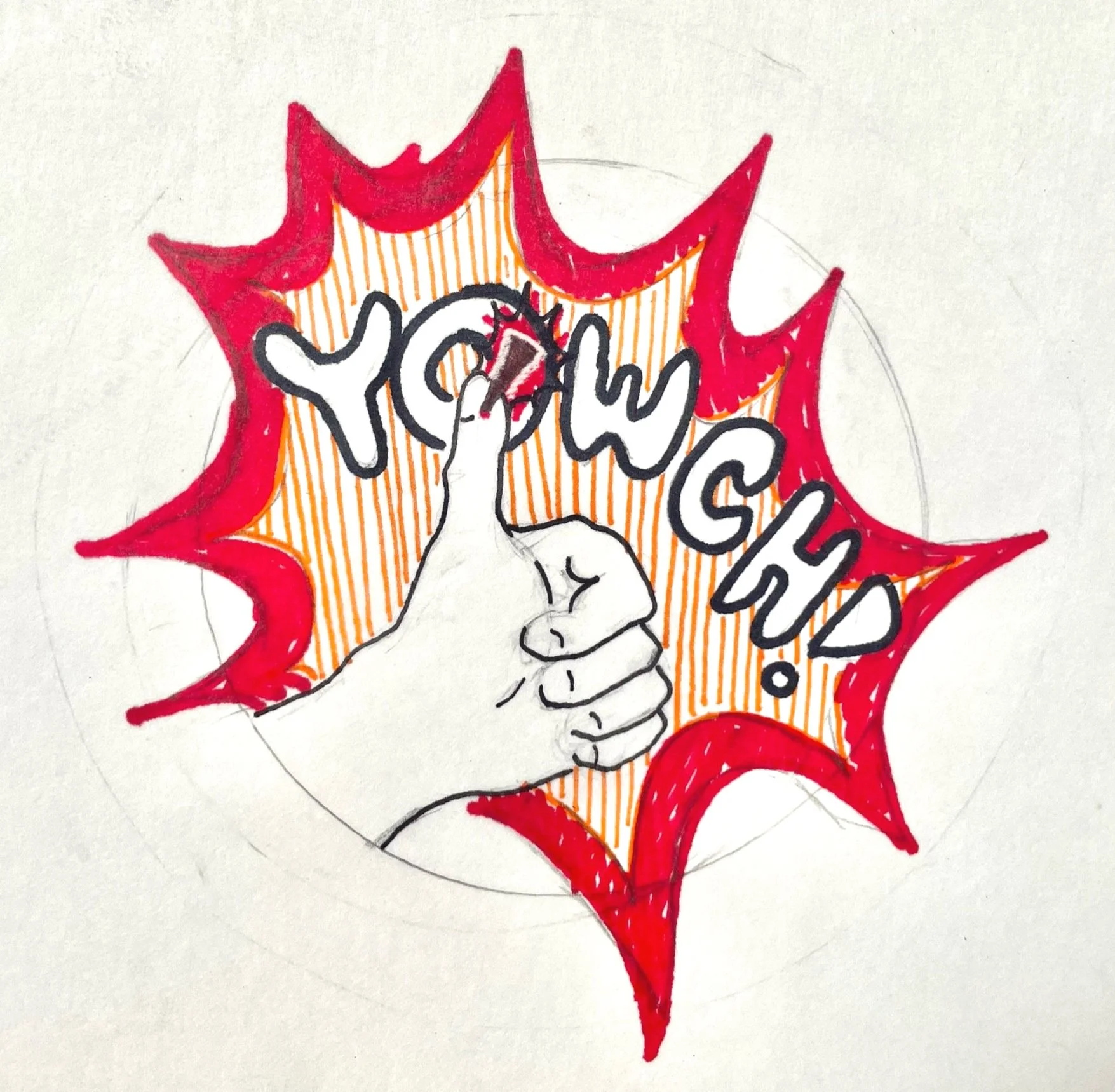
Ms. M, Thank You Sketch, 2025
Overview
Lesson Summary / Rationale:
Many students in the Ceramics 2 and Studio classes are seniors in high school. As the school year and their high school experience draws to a close, they will be asked to reflect on who has supported them, encouraged them, or challenged them throughout it all. The students will be asked to make a thank you gift and letter for this person, giving them the chance to express their gratitude for those in their lives. The students will understand the importance of appreciating the people in their lives, and will be able to convey the reasoning behind the appreciation within their art piece.
Artworks, Artists, and/or Artifacts:
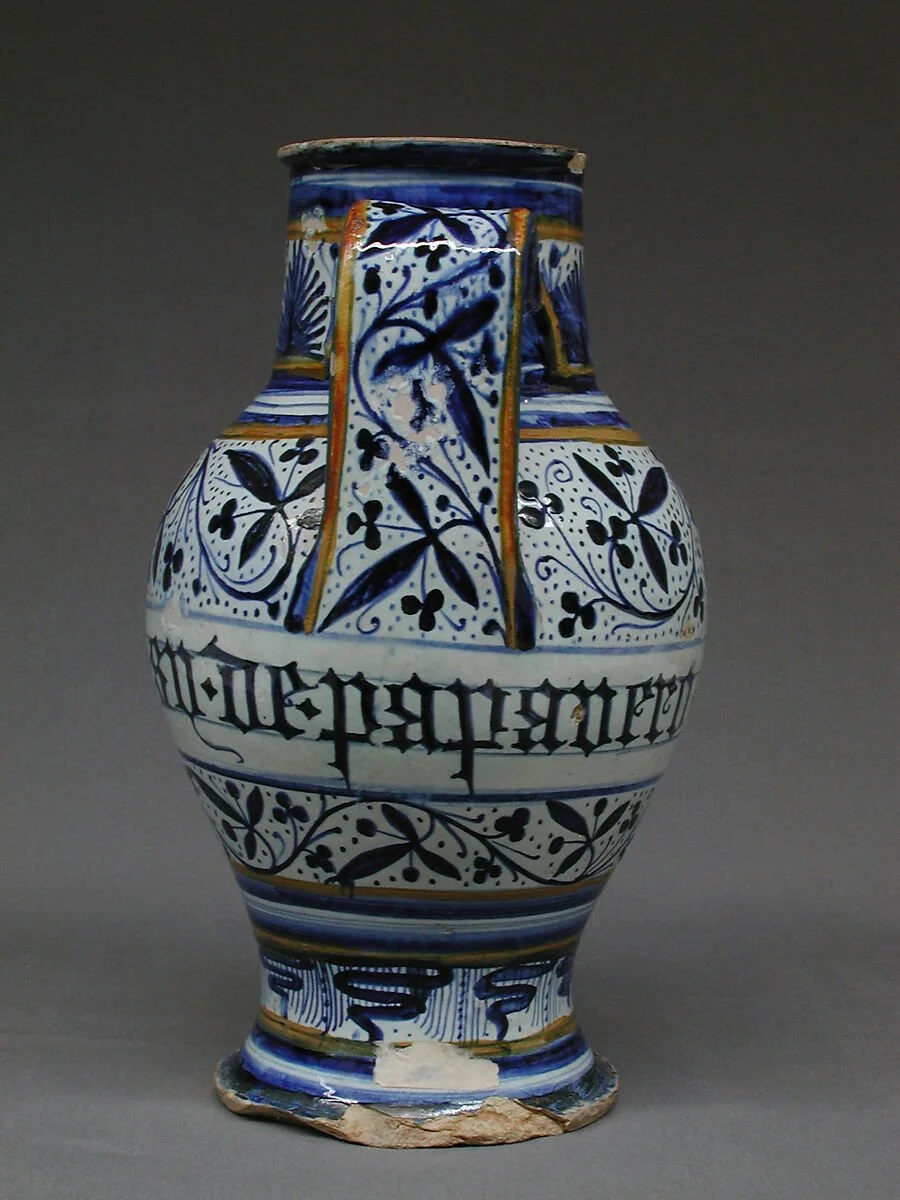
Maiolica Works from the Met
Italian maiolica works are historic examples of extremely ornate surface design. Many of these designs feature writings, narrative scenes, and decorative designs. The Inkstand with Apollo and the Muses is a fun example of a narrative scene mixed with a functional object. The Pharmacy Jar is one example of how students can incorporate writing or words onto their piece while still being functional. The students will be asked to think about what the person they are making this thank you for needs, wants, and likes.
Key Concepts:
People have appreciated their efforts, actions, and words being seen and heard.
People need to be supported, challenged, and encouraged to be the best they can be.
A thank you is more than just manners, it can be a heartfelt appreciation to the people in one’s life.
Essential Questions:
Why would a person want to tell another “thank you”?
How do those outside the family - friends, coaches, teachers, coworkers, etc - support, challenge, or encourage others?
Why are people deserving of thanks? What actions, words, or presence are deserving of thanks?
Standards
National Standards:
VA:Cr1.1.Ia - Generate and conceptualize artistic ideas and work
Enduring Understanding: Creativity and innovative thinking are essential life skills that can be developed.
Essential Questions: What conditions, attitudes, and behaviors support creativity and innovative thinking? What factors prevent or encourage people to take creative risks? How does collaboration expand the creative process?
Use multiple approaches to begin creative endeavors.
Students will be asked to journal and sketch throughout the project. Through journaling, the students should think of different people, ideas, and moments that they could focus on for their piece. The students will also sketch a final design for their work.
VA:Re.7.2.Ia - Perceive and analyze work
Enduring Understanding: Visual imagery influences understanding of and responses to the world.
Essential Questions: What is an image? Where and how do we encounter images in our world? How do images influence our views on the world?
Analyze how one’s understanding of the world is affected by experiencing visual imagery.
Students will think about how they want their message to get across. They will have to think about the different ways a visual can be taken, and the context in what they want to convey.
PA Standards:
9.1.12.H. Incorporate the effective and safe use of materials, equipment and tools into the production of works in the arts at work and performance spaces
Students will use materials safely in the ceramics room, as there are materials that may cause harm if used incorrectly.
9.4.12.A. Evaluate an individual’s philosophical statement on a work in the arts and its relationship to one’s own life based on knowledge and experience.
The students will be asked to reflect on the people in their life and their lived experiences, and evaluate their work and artist statement based off of the idea of gratitude.
CC.1.4.11-12.A Write informative/explanatory texts to examine and convey complex ideas, concepts, and information clearly and accurately.
Students will be asked to write an artist statement and reflection on their artistic choices and a letter to send to the person they are thanking
Objectives:
Students will explain their artistic choices and how it reflects their gratitude.
Students will list and journal what they are thankful for.
Students will create a vessel with the craftsmanship of artists, their piece will be structurally sound, no excess clay particles, no broken pieces, etc.
Students will spend their time wisely to create a piece that reflects the person or what they are thankful for.
Assessment:
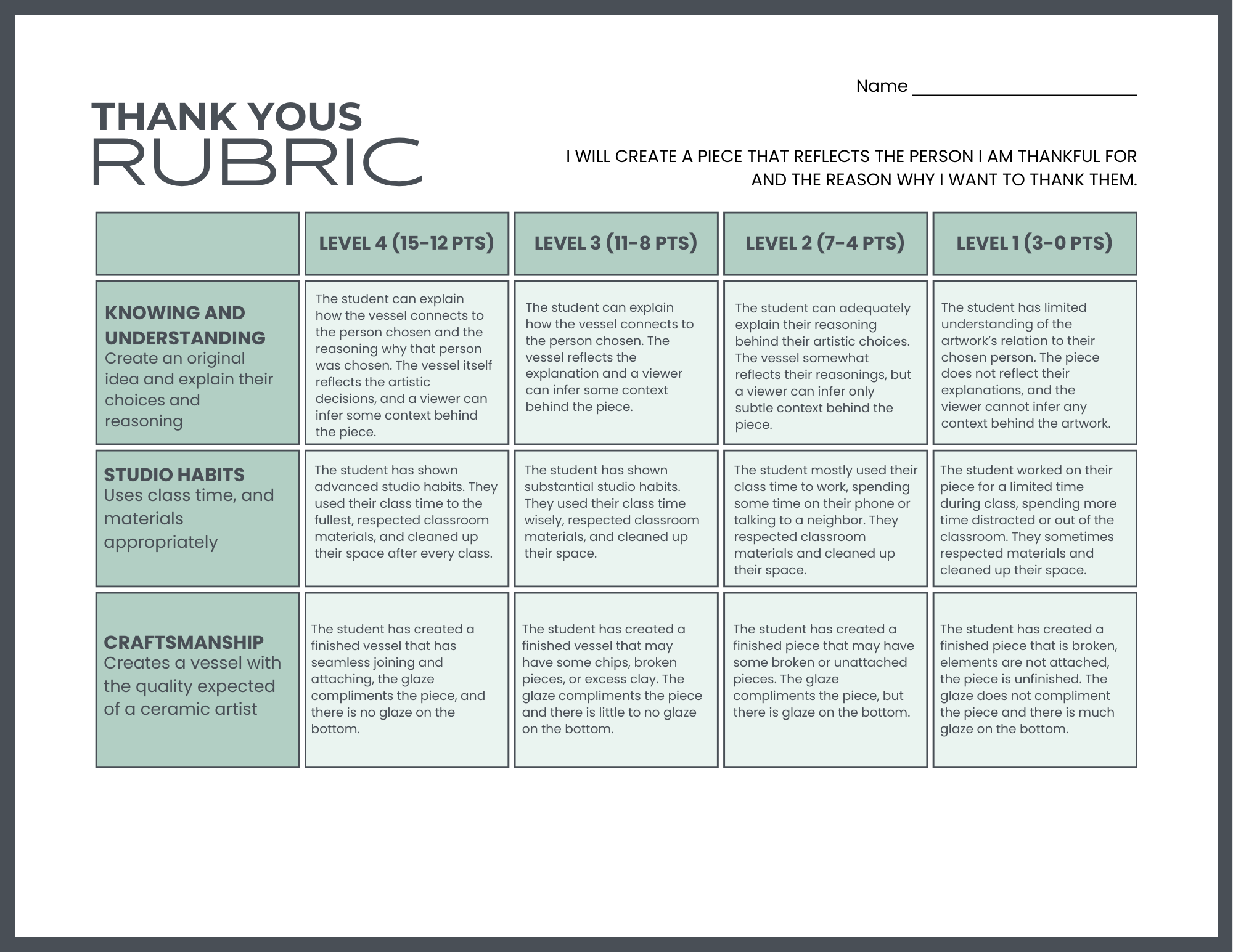
Assessment tools are attached under supplementary materials
Pre-assessment
During the introduction of this project, the students will be asked to respond to the question “What does the word gratitude mean?” This will allow the instructor to gauge the students’ understanding of the base concept of the lesson.
Formative
The formative assessments will be through the sketch sheet, class discussions, and daily journal entries. These will show where the student is and how they are thinking through the project.
Summative
The summative assessment will be found through the final rubric, self-evaluation, and artist statement of the piece. Together this culminates in the variety of discussion the class has had about gratitude and the final piece the student has made throughout the project.
Instructional Procedures
Day 1
Motivation or Engagement:
To begin the project, students will be asked to respond to the question, “What is gratitude?”
They will then be given a sheet of paper and 1 minute to write down as many things as they can that they are thankful for. This list can feature anything from their pets, their gaming systems, and the world around them. After the minute is over, share with their tables the silliest or most niche thing they are thankful for. The students will then have 1 minute to write down as many people as possible that they are thankful for. Once the minute is over, they will have 2-3 minutes to write down one or two words on WHY they are thankful for that person.
Development:
The students will be shown the objective of the project. It is an open-ended prompt where they can make almost whatever they want. This is a project the students won’t be able to keep, the goal for the project is that the student creates a piece that is made with a specific person and actions in mind. They will be asked to think about who has affected, encouraged, or challenged them this year and to factor in how they did so into the piece. What does this person love, need, or have use for, and why does this person deserve a thank you. The students will also be asked to decorate and write a letter to that person explaining their artistic choices and of course, thanking the person for whatever it is that they’ve done.
The students will also be asked to think about these questions:
Why would you want to tell someone thank you?
Is there someone, anyone who has supported, challenged, or encouraged you this year?
Think about outside your family - friends, coaches, teachers, coworkers, a regular?
WHY are you thanking that particular person? Think deeply about what that person has done to impact you to deserve a thank you.
The rest of the class period will be for the students to work on their sketches and begin their projects.
Culmination or Closer:
Throughout this project, the students will be asked to submit daily journals onto Classroom as their exit ticket. They will have these prompts below to guide them through the journals.
“Be as specific as possible—specificity is key to fostering gratitude. “I’m grateful that my co-workers brought me soup when I was sick on Tuesday” will be more effective than “I’m grateful for my co-workers.”
Go for depth over breadth. Elaborating in detail about a particular person or thing for which you’re grateful carries more benefits than a superficial list of many things.
Get personal. Focusing on people to whom you are grateful has more of an impact than focusing on things for which you are grateful.
Try subtraction, not just addition. Consider what your life would be like without certain people or things, rather than just tallying up all the good stuff. Be grateful for the negative outcomes you avoided, escaped, prevented, or turned into something positive—try not to take that good fortune for granted.
See good things as “gifts.” Thinking of the good things in your life as gifts guards against taking them for granted. Try to relish and savor the gifts you’ve received.
Savor surprises. Try to record events that were unexpected or surprising, as these tend to elicit stronger levels of gratitude.
Revise if you repeat. Writing about some of the same people and things is OK, but zero in on a different aspect in detail.”
Day 2
Motivation or Engagement:
The students will be asked to talk with their tables and share good news, a joke, or what they are thankful for that day.
Development:
The students will have a work day for the remainder of the lesson, and the instructor will meet with each student to check in with them throughout the process.
Culmination or Closer:
The students will be asked to submit daily journals onto Classroom as their exit ticket.
Day 3
Motivation or Engagement:
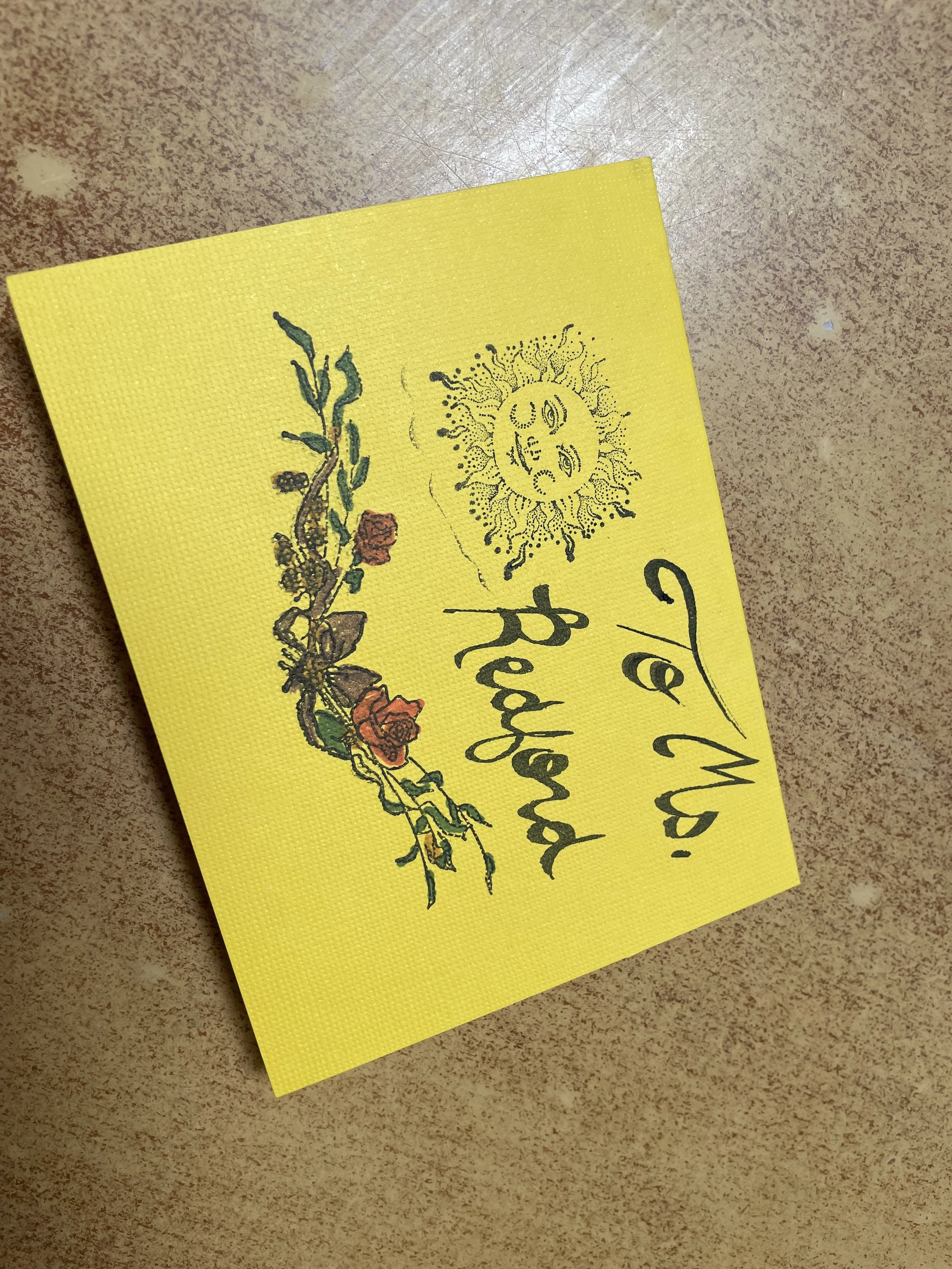
The instructor will bring in stamps, allowing the students to work with a different medium. These stamps can be used on both their thank you projects and on the letter that they make.
Development:
The students will have the opportunity to make the front of their letters in class. The instructor will demonstrate using a brayer and acrylic paint to ink stamps. The students may also choose to decorate their cards in any other way.
The rest of the day will be a work day.
Culmination or Closer:
The students will be asked to submit daily journals onto Classroom as their exit ticket.
Day 4
Motivation or Engagement:
The students will set out their projects for the whole class to see. They will be asked to discuss for a minute at their tables what they thought of the project and idea behind it.
Development:
The students will set out their gift and cards for a class critique. The students will not read the letter’s contents, but will look at them as a set. It will be a silent snake critique, so students will move from seat to seat writing down their thoughts and critiques for each person. They will be asked to think about who the piece may be for, and if they can decipher why they are thanking that person.
Culmination or Closer:
The students will be asked to submit daily journals onto Classroom as their exit ticket.
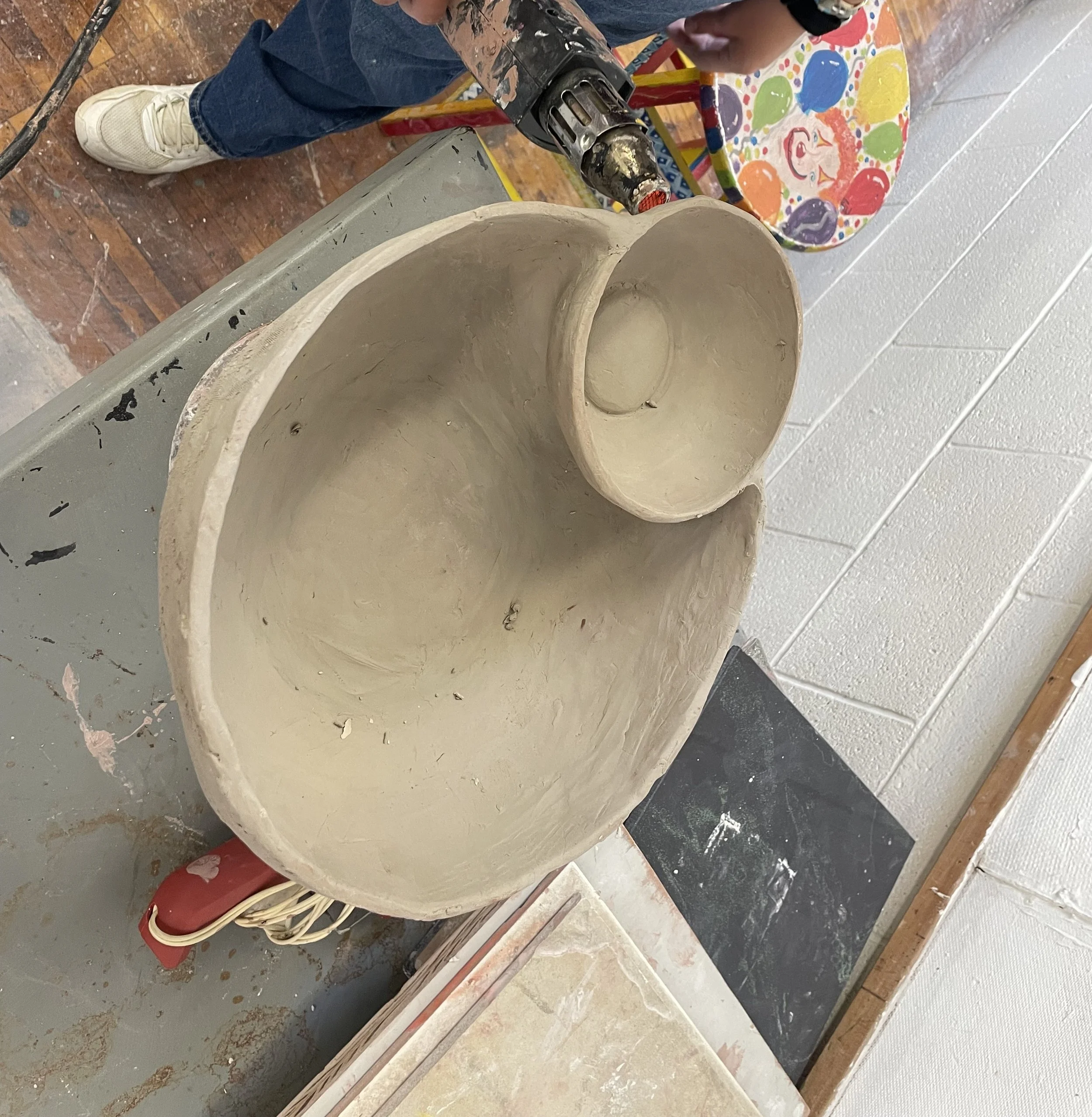
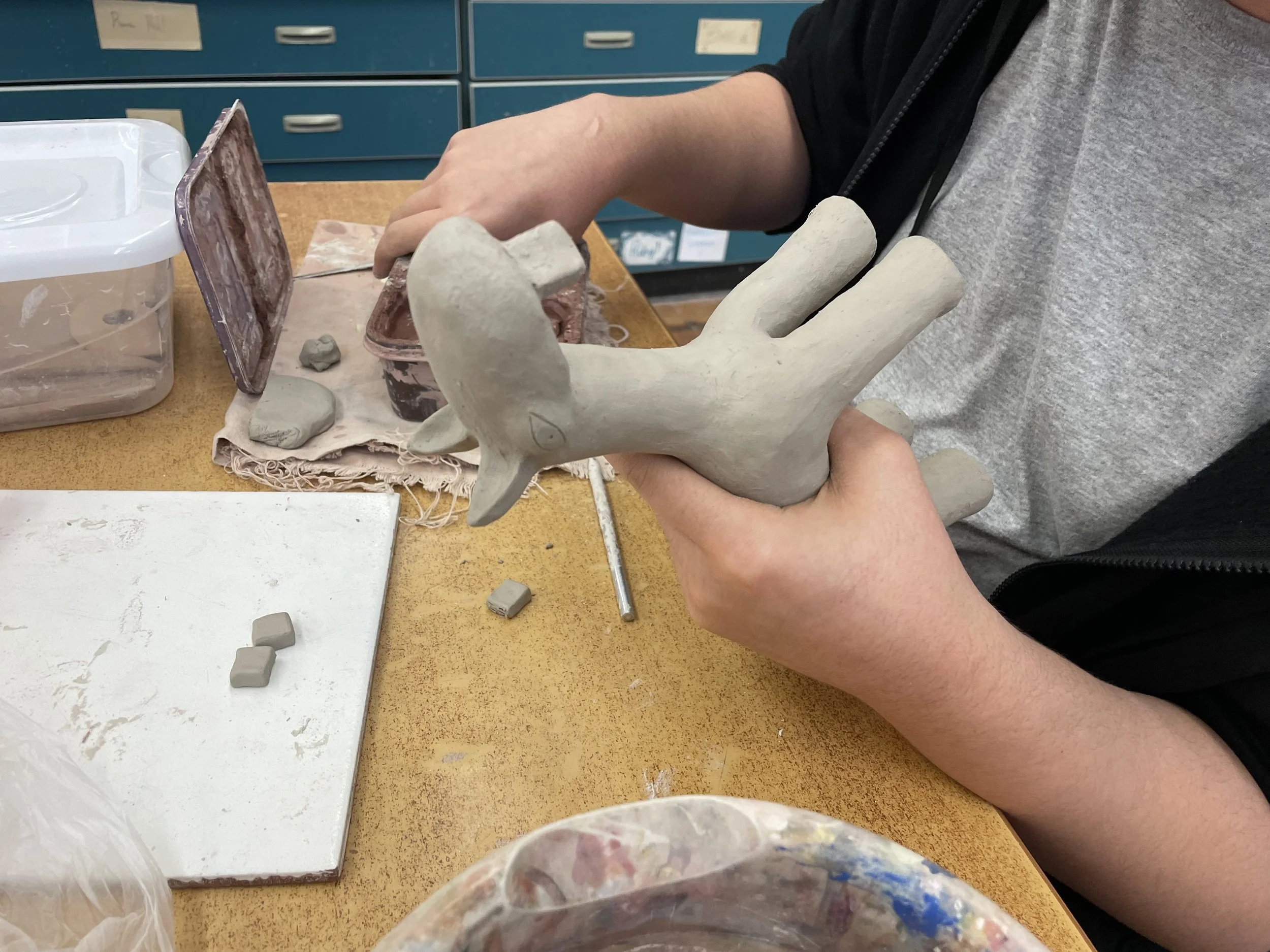
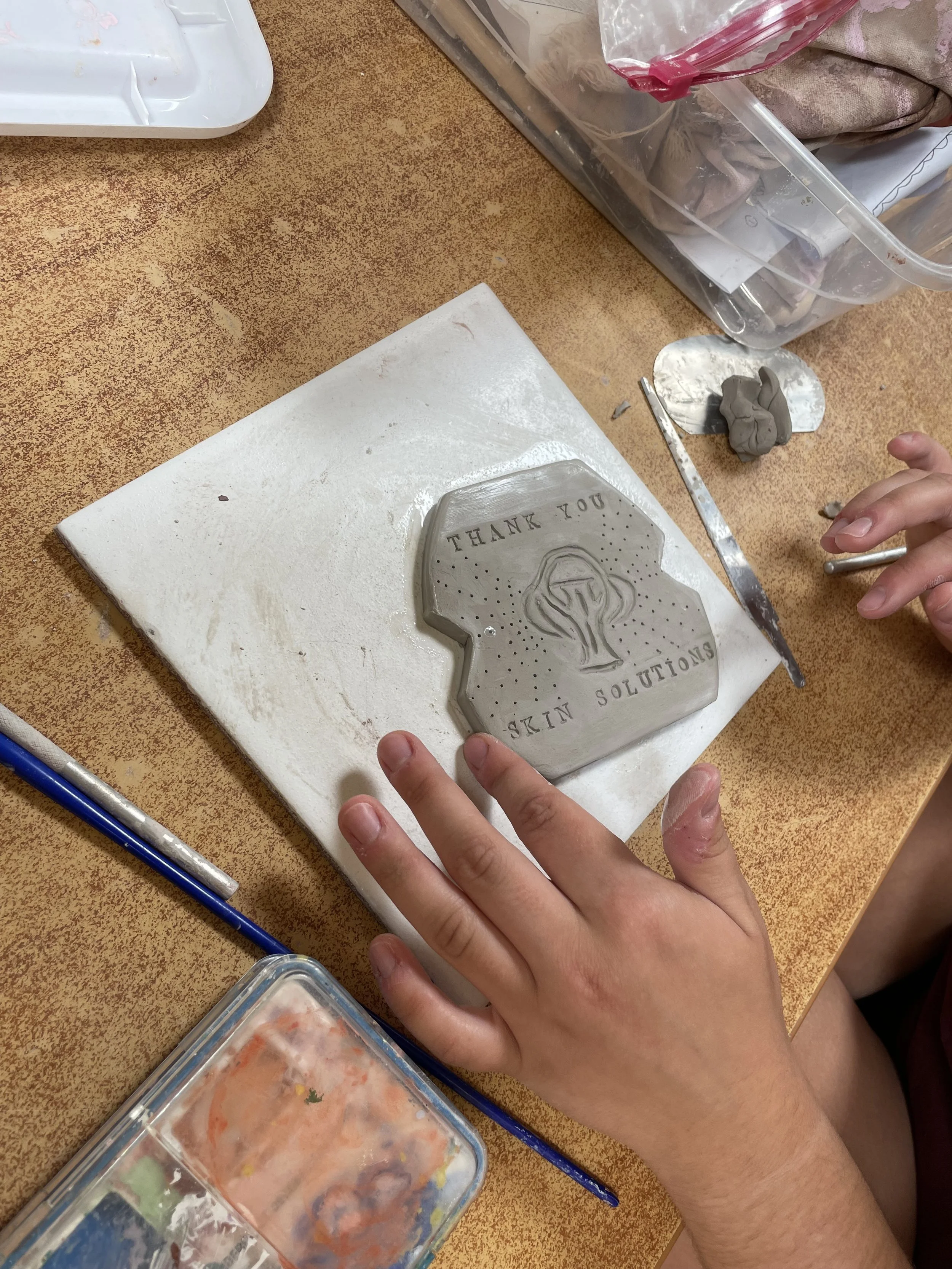
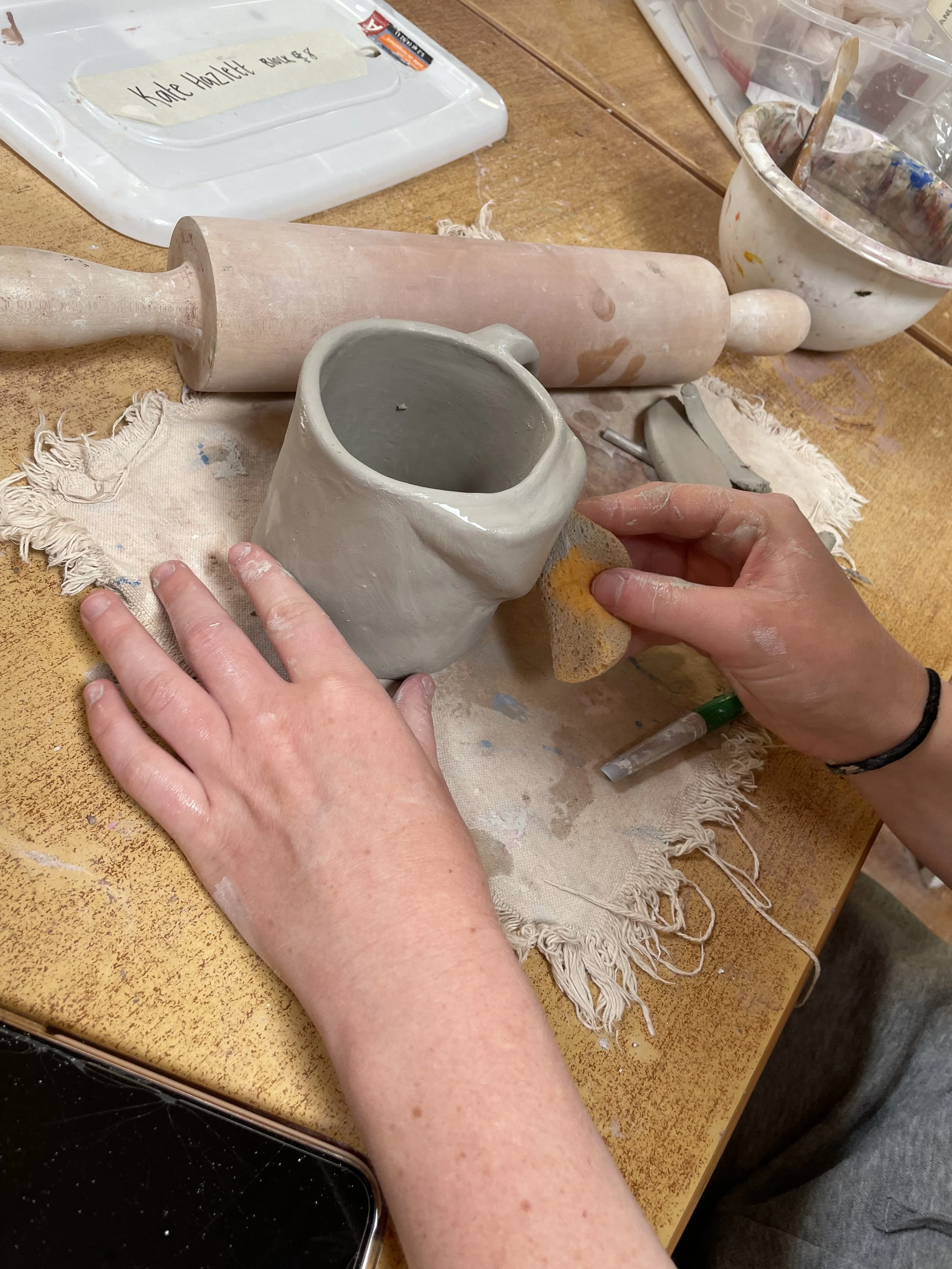
STUDENT EXAMPLES
SUPPLEMENTARY MATERIALS
Student Supplies
Stamps
Blank Letters
Ink + Brayers
Paint
Considerations for Modifications and/or Adaptions
Students that finish their project early can work on their letter draft, and decorating their letter. They will also be able to make another thank you gift or work on their personal project.
Students that need more time must come in for daily WIN time or during their study halls. If they need more time after that, the instructor will work with them to ensure that they have the necessary materials and ideas to finish.
Teacher Research and Preparation:
Students can use acrylic paint and brayers to ink stamps to decorate their letters.
https://www.mindful.org/a-simple-weekly-mindfulness-practice-keep-a-gratitude-journal/
To reference for the gratitude journals.
Students can also use stamps, trailing, and carving on their pieces if they wish to write their reasons there.
https://www.metmuseum.org/art/collection/search?q=maiolica
The Met has a wonderful collection of Italian maiolica works!
